The plans and measures for Army expansion to meet the crisis of 1940 were matched by a naval expansion program, designed to provide the United States with a “two-ocean” Navy that could cope simultaneously with Japanese naval power in the Pacific and with the naval power that Germany and Italy had or might acquire in the Atlantic. On 7 June, the Navy’s General Board proposed a building program that would about double the existing strength of the Navy in combat vessels. Congress approved the program on 19 July, and by the fall of 1940 the Navy had begun construction on more vessels than it then had in actual service. Outside of the military services, mobilization called forth a host of new civilian agencies under the Advisory Commission to the Council of National Defense to supervise the gradual transformation of the national economy from a peacetime to a wartime basis.
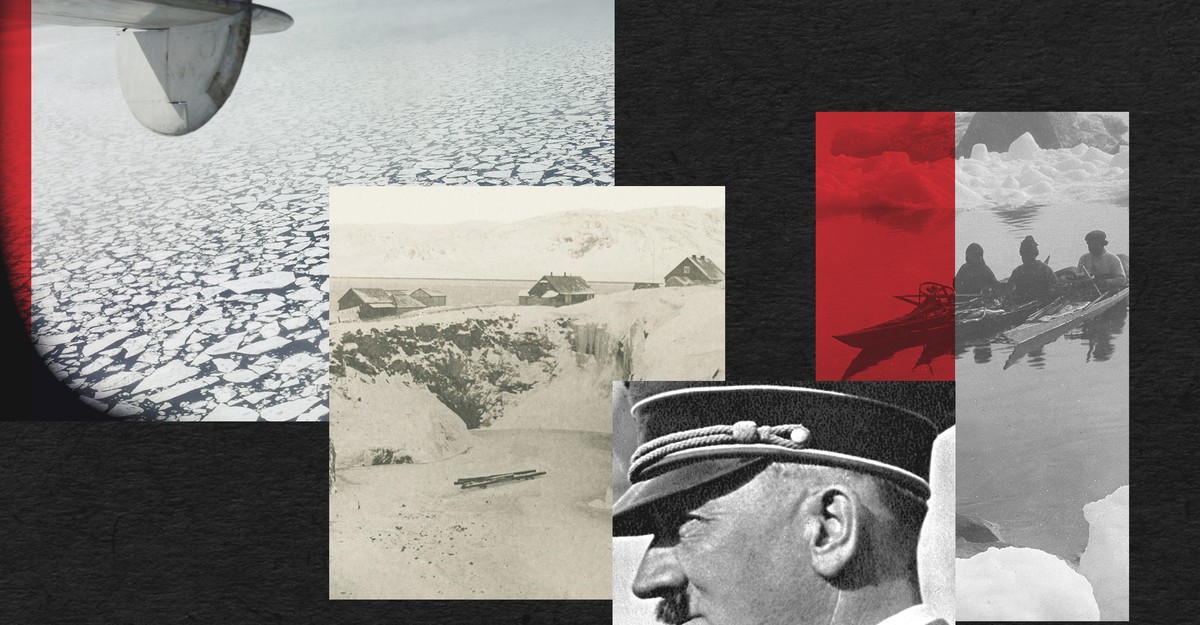
Germany’s occupation of Denmark raised immediate problems for the United States with respect to the future of Greenland and Iceland. The Danish colony of Greenland was completely unprepared to resist a German attack
or occupation. Since Greenland was considered a part of the Western Hemisphere, the United States opposed its military occupation by British or Canadian forces; such an occupation might give the Germans an excuse to attack
this northern flank of the hemisphere. At the same time, the United States Government was as yet unwilling to commit itself to protection of Greenland with its own forces. It limited its actions to opening a new consulate at Godthaab, the Greenland capital; to the establishment of a Greenland patrol by Coast Guard cutters; and to the sale of a small quantity of arms and ammunition to Greenland authorities to be used for protection of the cryolite mine at Ivigtut.
The planners assumed that Germany and Italy could not launch a major military attack against the Western Hemisphere until they had defeated Great Britain and gained naval control of the eastern Atlantic. It now appeared that British naval power based on the British Isles could be maintained at least for another six months. Even if the Axis Powers then gained control of the bulk of the British Fleet, it would take them six additional months to assimilate British naval strength and prepare it for offensive operations across the Atlantic. The United States, therefore, probably had at least a year’s grace in which to complete its military preparations. By the end of that year (roughly, by October 1941), American mobilization under the long-range program was expected to produce the 1,400,000-man Army and enlarged Navy that would be strong enough to resist successfully any Old World military aggression against the New. During this year, too, the United States could afford to keep the bulk of its fleet in the Pacific to check Japan. On the other hand, if, as seemed increasingly probable, Japan should in the meantime strike southward in the western Pacific, the United States could not afford to commit a major portion of its naval strength in an effort to stop Japanese aggression. American naval power must be kept mobile, free to shift to the Atlantic to deal with any emergency that might arise there.
In the event, Nazi Germany never defeated the UK, and then attacked the Soviet Union instead of going after the Americas, and was at war with two major powers already when it declared war on the US, so those contingencies never really arose.
The US also intended to make use of Latin American labor to greatly increase its productive capacity, in that contest of productive capacity. That was only ever partly activated — the cataclysmic materiel-heavy cross-Atlantic war with the US and Canada fighting the Axis wasn’t the way that things played out.
The Bracero Program (from the Spanish term bracero [bɾaˈse.ɾo], meaning “manual laborer” or “one who works using his arms”) was a temporary labor initiative from 1942 to 1964 between the United States and Mexico that allowed Mexican workers to be employed in the U.S. agricultural and railroad industries.[1]
The program, which was designed to fill agriculture shortages during World War II, offered employment contracts to 4.6 million braceros[4] in 24 U.S. states. It was the largest guest worker program in U.S. history.[1]
The war plans were not conditional on atomic weapons — they were made prior to the creation of those weapons. However, in that timeline, assuming that the Manhattan Program tracks something like its historical rate in our own timeline, the war would probably have run longer and thus the US and Germany would still be fighting when the weapons became operational. The US would probably thus have wound up utilizing atomic weapons against Germany; the late war US projections were that the US would scale up to mass production of atomic bombs within months. My guess is that the WW2 death toll would probably be higher than it is in our own timeline.


[continued from parent]
In the event, Nazi Germany never defeated the UK, and then attacked the Soviet Union instead of going after the Americas, and was at war with two major powers already when it declared war on the US, so those contingencies never really arose.
The US also intended to make use of Latin American labor to greatly increase its productive capacity, in that contest of productive capacity. That was only ever partly activated — the cataclysmic materiel-heavy cross-Atlantic war with the US and Canada fighting the Axis wasn’t the way that things played out.
https://en.wikipedia.org/wiki/Bracero_Program
The war plans were not conditional on atomic weapons — they were made prior to the creation of those weapons. However, in that timeline, assuming that the Manhattan Program tracks something like its historical rate in our own timeline, the war would probably have run longer and thus the US and Germany would still be fighting when the weapons became operational. The US would probably thus have wound up utilizing atomic weapons against Germany; the late war US projections were that the US would scale up to mass production of atomic bombs within months. My guess is that the WW2 death toll would probably be higher than it is in our own timeline.