
This was why MMO experience was sought out.
Off-and-on trying out an account over at @tal@oleo.cafe due to scraping bots bogging down lemmy.today to the point of near-unusability.


This was why MMO experience was sought out.


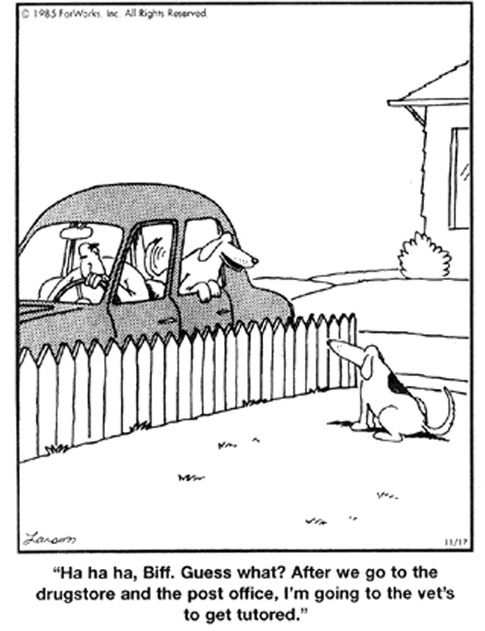
—The Far Side, October 15, 1990


Hmm.
A lot of these are going to be just request-driven. That is, they aren’t really doing anything while idling. Thus, they don’t really need to be actually running.
If the idle memory usage is an actual concern — and honestly, the OS is probably just gonna page things out if the software is truly idle and it needs the memory for something else and it has paging space…I kind of assume that someone has built some sort of system that works like inetd, which avoided leaving non-containerized servers running. You register a port, and then inetd listens on it. When someone connects, it starts up the daemon in question (say, Apache or whatever). Just need to start a container on demand here. Maybe close it down after a long-enough period of inactivity.
EDIT:
https://old.reddit.com/r/docker/comments/72sdyf/startrun_a_container_when_incoming_traffic/
Start/run a container when incoming traffic detected
Sounds like you’re looking for inetd.
A more modern version of this is systemd socket activation.
Podman supports socket activation since version 3.4.0 (released Sep 2021).


how i dream of buy a few 12 tb drives.
Rotational hard drive prices are up, but not that far, not like RAM, especially if you’re not getting the largest drives possible.

That’s maybe a doubling on 12TB drives from the trough. I mean, sure, it’s significant, but if you were already talking about getting several, you can certainly get one.


Actually, Major Major had been promoted by an I.B.M. machine with a sense of humor almost as keen as his father’s.
—Catch-22, Copyright 1961
https://en.wikipedia.org/wiki/Bingo_(folk_song)
Early versions of “Bingo” were also noted as adult drinking songs, as in a version where individual singers were expected to sing a letter from the spelling of the name, and were to take a drink if they failed to do so correctly.[9]
TIL.


In the global financial crisis, in at least California, which is a non-recourse mortgage state — that is, if someone defaults on a mortgage, the lender can only go after the property — a number of people discovered that if they refinanced, the new mortgage was recourse, and a lender could go after other assets and wages to cover the default. For people who bought into the top of a bubble, then walked away from the house after prices dropped and they were underwater, this was a major issue.
Those rules were later changed, but I would be careful to understand the implications of refinancing a mortgage in your particular jurisdiction, as they may be non-obvious and substantial.


I think, from past reading, that some of the shift to white — well, or at least light colors — may have been with the intention of making interiors brighter. Like, more reflected light, so for a given amount of light from windows or from lamps, the room is better lit.
Like, I remember a lot of 1970s-era stuff looking dark and shadowed. Dark wood paneling and often darker furniture. If you look at photos of house interiors that people took, a lot were also kinda dark. The 1960 and 1970 shots from the above article aren’t dark, but those are gonna be professionally-taken pieces, might have light diffusers or whatever set up for the shot. If you have light colored stuff all over, the light bounces around more, get more diffuse lighting.
You can do even better if you do things like have mirrored walls, but that’s fragile and can be obnoxious.
So it might have been a shift based on functionality to try to get more and more-diffuse lighting, and white just happened to be the most-reflective color.
Today we can do energy-efficient diffuse lighting with things like LED strips. If wanting more diffuse light is the dominant factor causing a shift towards white, I wonder if extensive use of that might reduce the desire for light colors. Though…that doesn’t help where one is relying on sunlight during the day.
There are passive devices that can gather sunlight. I remember that sailing ships used to use these glass things that were flush with the deck but had a sort of crystal shape to pipe more light down to the top deck. That wasn’t a lot of light — ship interiors were dark — but maybe we could use some combination of that and other stuff.
searches
Apparently I’m thinking of a deck prism.
According to Wikipedia, something analogous was used in buildings, but electric lighting kind of killed it off.
https://en.wikipedia.org/wiki/Prism_lighting
Prism lighting is the use of prisms to improve the distribution of light in a space. It is usually used to distribute daylight, and is a form of anidolic lighting.
Prism lighting was popular from its introduction in the 1890s through to the 1930s, when cheap electric lights became commonplace and prism lighting became unfashionable. While mass production of prism lighting systems ended around 1940,[1] the 2010s have seen a revival using new materials.[2]


There are a number of games — particularly those since SSD storage became pretty much the norm — that do not load a whole level, but load while playing. Why not just load the game (or the level)? Because it lets devices with less RAM store more stuff than they otherwise would. You have more relaxed caps on things lile texture size.
I’d assume that the engine is still going to try to predict what content is going to be needed prior to it being needed, that it’s got a strategy more sophisticated than just “load resource first time it’s requested”. But SSD storage is going to be more forgiving of a miss than rotational storage.
Bethesda uses the term “cell”. I know that their engine uses a square grid as the loading unit, loads a sort of circle of cells around the cell where the player is.
searches
It sounds like the Unreal 5 terminology is “sublevel”, for the units loaded.


We might have a habit of being curious and seeing things and patterns that aren’t really there. And it’s frustrating to watch it misfire.
But…maybe it’s worth it to come up with silly ideas on a fair number of occasions if that same tendency sometimes leads us to make valid discoveries that we wouldn’t otherwise have made. Sometimes even people who have wrong ideas run over important things.
There was this guy once who disregarded well-established (and correct) geophysical science with some cockamamie theory that he thought would make him rich. He tried to sell a bunch of people on funding his ideas, who mostly turned him down. Eventually, he managed to get funds and set out to prove his ideas. That experiment would have been suicidal for him — because his ideas were totally wrong, making the experiment lethal — if not for the great good fortune of, during the course of this experiment, making a (very important) real discovery that saved his life. He then tried — not very successfully — to claim that his new discovery actually showed that his ideas were correct.
He was a dreamer, and a bit of a nut, and he was wrong. His name was Christopher Columbus, and he had convinced himself that the circumference of the world was much smaller than was actually the case, and that if there was nothing but ocean to the west of Europe, one could safely reach Asia in a single trip of the sort that ships of the time could make. Instead, he discovered the New World.
There were a lot of other people who went looking down other weird rabbit holes with other weird ideas. They usually didn’t come up with anything worthwhile.
But…that discovery was worth a whole lot of poking around blind alleys.
So, hey, maybe a human tendency towards a bit of being a crank and running down crazy ideas is worthwhile, if it’s the price we pay to occasionally come up with something really amazing down a weird rabbit hole.


That comment is quoting text from an article.


Some car manufacturers have used WWI-style dazzle camouflage to make it harder to photograph prototype cars.

If it’s hard for a viewer to even make out the car’s lines, probably hard to make out anything on the car too.


What are they paid outside the US?
I mean, that’s going to depend radically on the country. Eritrea and France are not going to look very similar.


Thinks of how to look up some data on this.
There are a bunch of “by decade” style things. I bet someone has done one for interior design.
searches
If one takes this as authoritative, I’d say that it well predates Gen Y. Going by the text in this article, it sounds like the peak was maybe the 1960s or 1970s.
https://mcarthurhomes.com/design-by-decade/
1960s
Bright colors were introduced in the 60s, along with new shapes and designs. Neon colors, bold prints, and texture fabrics were common design elements of home interiors. Couches and chairs were often covered with wild fabrics (influences of the hippie movement). 60s homes also had shag carpeting and wood-paneled walls to create a cozy space. Lamps were also a huge part of defining any space; lamps in the 60s had interesting shapes, and paper lampshades were colorful.
Influenced by the space race, furniture and decorations in 60s homes looked like they came straight from the future. Homebuilders also integrated technology and used new materials in home construction.
1970s
Color continued to be a large part of interior design in the 1970s as self-expression flourished. Mustard yellow was a favorite, but it was often combined with other bright colors to create a unique palette. Crafts and DIY projects were commonly seen throughout the 70s house to reflect the individuality of the time period.
Nature replaced the technology influences from the 60s, as society became more socially conscious. As a result, design relied on organic lines, colors, and forms. Many homes had large windows or skylights to bring in natural light. And interior designers also began to think more about self-sufficient designs and creating an environmentally-friendly space.
This says that pastels started to become a thing in 1980s — that’s still color, but more muted.
1980s
Triangles were a popular shape in the 1980s, and pastel colors were extremely popular. Pastels offered a softer color palette than the 70s. Floral patterns were popular, especially for drapes and bedding. Chintz often decorated homes in the 80s, along with floor-sweeping window drapes.
Overall, interior design trends of this time period were often a conglomeration of previous decades. Interior design in the 80s reflected opulence, ornamentation, and over-indulgence. But unique to the 80s was the concept of an open kitchen. This layout was designed for family living and helped create a more open dining area and living room.
In the 1990s, they say it started to be common to just have beige or white rooms:
1990s
During the 90s, interior design focused on creating a comfortable space. Homes had neutral colors and featured natural wood. Natural wood cabinets were extremely popular in kitchens. If a kitchen didn’t have natural wood cabinets, it probably had white cabinets. Walls in some rooms were covered in a patterned wallpaper to add some color and texture, but it wasn’t uncommon to see a room that was just beige and white.
Furniture and decor were somewhat minimal, especially compared to the 80s. Wall-to-wall carpet helped some homes feel cozier. And long drapes continued to be quite popular.
They don’t say much about the 2000s except that green became more common as an accent:
2000s
Interior design in the 2000s was extremely environmentally-friendly. Greens became more stylish as a wall color or accent color. Homeowners sought after materials that were better for the environment, like recycled materials, and environmentally-friendly appliances. Some homeowners went as far as to bring the outdoors inside by building sunrooms to let in a lot of natural sunlight.
Overall, the layout of homes in the 2000s was more relaxed than in previous decades. Open floor plans allowed interior designers and homeowners to choose what they wanted a space to become. For example, it was common to have an “office” area with a computer in the heart of the home instead of in a separate room.
They say that neutral colors dominated in the 2010s:
2010s
Because of the global marketplace that exists today, anyone can be an interior designer. Cookie-cutter designs just don’t cut it. Homeowners looking for something unique to make their house stand out. Designs today feature handmade craftsmanship and showcase the DIY attitude. And you will find eclectic decor that makes a home feel authentic and genuine.
While there is still room for accents of color and sections of prints, homes are typically painted with more neutral colors like grays and tans to create a clean look and a cozy atmosphere. Homes continue to be built with open layouts to accommodate families.
And that you still had neutral tones in the 2020s (and minimalism is mentioned)
2020s
The 2020s interior design trends focus on sustainability and smart home technology, reflecting a global awareness of environmental impact and technological integration.
Eco-friendly materials and upcycled furnishings dominate, supporting a greener lifestyle. The rise of smart devices and home automation allows for energy-efficient and convenient living. Style-wise, there’s a shift towards minimalism with a twist, incorporating bold statement pieces and vibrant accents against a backdrop of neutral tones.
Multifunctional spaces are essential, accommodating remote work and wellness activities. Natural light and biophilic design principles enhance the connection to the outdoors, promoting health and well-being in home environments.
So, this doesn’t have numbers, and I like numbers, but I’ll buy that it’s at least a rough approximation of what things looked like. If this is correct, the shift away from vibrant colors had to have at least started by the 1980s. If you figure that new households had maybe people that were, say, 20, that’d be people maybe born in 1960, so late Boomers or maybe early Gen X are about the latest that the shift could have started.
That being said, it also seems fair to say that it was a progression, and it was probably taken further by later generations.


So, from past reading, I believe that a lot of jobs in brick-and-mortar banks — which have historically had a major brick-and-mortar presence — have been on a long decline. That’s a phenomenon that well predates popular LLM use, brought about by Internet, ATMs, and similar, which tended to displace brick-and-mortar stuff.
I physically went by my local bank the other month (for the first time in a long time) and while the building was still there, it was like a tomb. All of the service desks that had once held tellers were empty. There was one person in an office handling the few people coming by in person.
searches
https://www.alliantcreditunion.org/money-mentor/the-rise-of-online-banking-in-the-us
Every year, more and more Americans are going online to do their banking.
According to Pew Research Center, 46 percent of adults in the United States banked online in 2010. That number grew to 51 percent in 2013, and in 2015, a full 81 percent of adults who manage their household’s finances banked online.
https://www.branchspot.com/bank-branches-closed/
U.S. banks have been closing branches for years — thinning out “banking deserts” where the nearest branch is now miles away. Branchspot tracks 939 closed or relocated branches nationwide, sourced from the FDIC.


You could get a Thermos and brew up a bunch yourself, just take a chilled drink with you.
Gives you a wider selection and doesn’t take long for the Thermos to pay itself back.
I don’t usually take iced tea, but I have been known to take a Thermos of ice water.


I agree that “open source” is often incorrectly used to refer to open-weight models, things that are more analogous to closed-source software where you get the binaries.
That being said, the article does correctly use “open weights”. The submitted title here lacks it, but the current title of the article does appear to have it, so either the article author updated the title or the submitter truncated it.
It sounds like it’s other countries in Europe as well.
https://old.reddit.com/r/gaming/comments/1vkgf1k/valve_notifying_hardware_customers_about_a/