

cross-posted from: https://mander.xyz/post/44510649
TL;DR:
A generation raised amid intense economic competition, expensive housing, and the one-child norm increasingly sees motherhood as a form of bondage and rejects it. The Chinese state, however, continues by inertia to rely on the same tools it used forty years ago, viewing women’s bodies merely as a means of reproducing the population. But it is no longer possible to return women to the model of “laborers by day, mothers of the nation by night.” Efforts to increase pressure only fuel resistance … And the more radically the authorities try to control fertility, the more painful the side effects become.
…
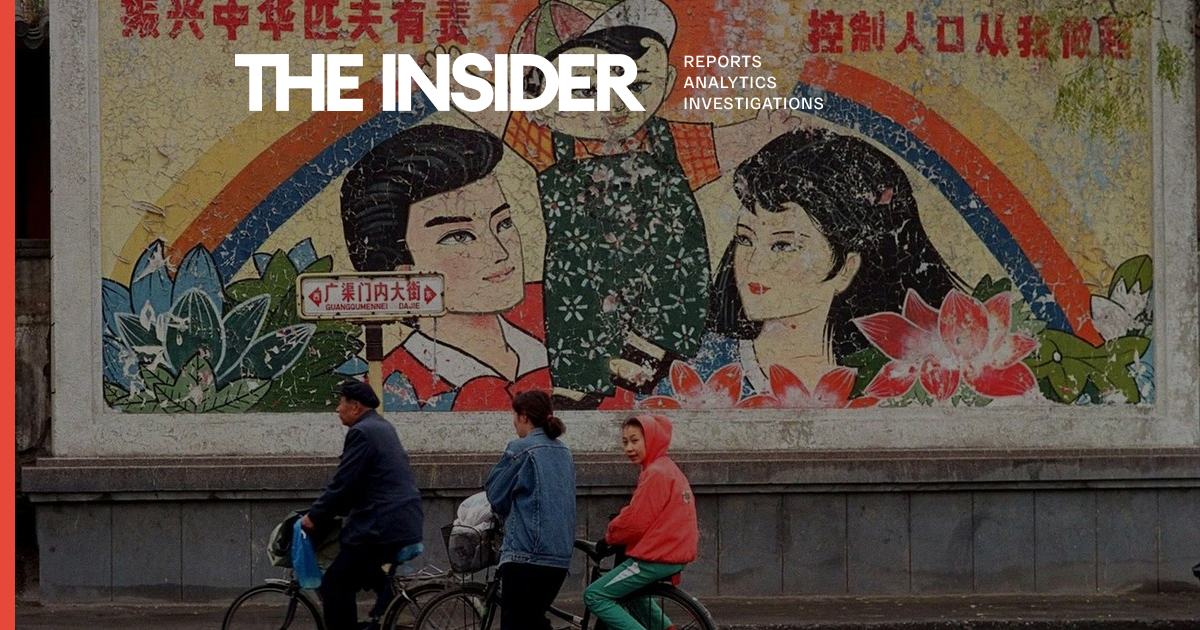
In the 1970s, China was going through hard times. The country had only begun to overcome the consequences of the Cultural Revolution, the economy was depleted, agriculture was inefficient, and memories of the mass famine that resulted from the Great Leap Forward had not yet faded. At the same time, birthrates remained extremely high: almost six children per woman. One measure aimed at combatting the crisis involved the implementation of demographic controls.
At the beginning of the decade, Beijing launched the nationwide campaign “Later, longer, fewer” (wan, xi, shao), which promoted later marriages, limits on the number of children per family (no more than two in cities and three in rural areas), and three–four-year gaps between births.
For the first time, the state deployed a whole set of tools: free contraceptives, mandatory consultations with specialists, and fines for failing to follow the state’s recommendations. But these measures did not produce the desired results. By the time Deng Xiaoping came to power in 1978, China’s population had reached 960 million people, while income levels and labor productivity remained extremely low.
…
The new government declared its ambition to guide the country towards modernization and rapid economic growth, and it viewed the extremely high birthrate as a threat to national prosperity. In its effort to overcome the perceived problem, an unexpected figure became the architect of China’s new demographic policy: military engineer and missile-systems and cybernetics specialist Song Jian.
…
The state of demographic science in China in the 1970s was poor, largely due to the fact that many specialists had been repressed or pushed out of the country. In this context, Song Jian’s cybernetic approach looked modern and persuasive to the authorities, writes Harvard anthropologist Susan Greenhalgh. With no alternative scenarios available, the idea of treating the population as a manageable system in which fertility is merely a parameter that administrators can adjust at will was accepted as a scientifically grounded solution.
…
By the 2000s, demographers were beginning to realize that China’s official statistics did not reflect reality. In an article for Population and Development Review, researchers Philip Morgan, Gu Zhigang, and Sarah Hayford recalculated the figures, taking unregistered children into account. They estimated that the country’s total fertility rate had fallen below the replacement threshold, reaching 1.4–1.6 children per woman compared to the normal rate of 2.1, but it had not fallen to 1.0.
In 2013, Chinese authorities allowed couples to have two children if at least one spouse was an only child. Then, starting from Jan. 1, 2016, further amendments to the population and family-planning law took effect granting any family the right to have a second child. In May 2021, Beijing permitted Chinese families to have three children, issuing the document “On optimizing birth policies and promoting long-term and balanced population growth.”
…
In a study published in November in the European Journal of Population, researcher Shen Shaomin points out that the “generation of only children” tends to want even fewer children than their parents. The share of Chinese who prefer not to have children at all has nearly tripled when compared with the 1980s generation. Once it becomes normal in society to have a single child, reversing that norm is nearly impossible.
…
Beijing attempts a change
The contraceptive tax introduced in December 2025 is the most notable, but not the only attempt by Chinese authorities to influence the country’s demographics. Over the past five years, dozens of provinces and cities across China have adopted their own programs to boost birthrates, experimenting with direct cash payments, tax breaks, housing subsidies, and extended parental leave.
The ideological component is also growing stronger. In 2021, China’s State Council issued a “Development Plan for Chinese Women,” which included language about “strengthening national resources” and “building a harmonious family.” In line with this, state media and party platforms began actively promoting the image of a “responsible mother,” who is expected to “contribute to the nation’s destiny” by having two or three children.
At the same time, human rights organizations are noticing attempts to restrict access to abortion, especially those sought for nonmedical reasons. In its “World Report 2025: China,” Human Rights Watch notes increasing gender discrimination and growing limits on reproductive rights. Amnesty International reports cases in which medical institutions were advised to dissuade women from terminating pregnancies, and the set of documentation required for performing such procedures has expanded.
Women without a voice
In its attempts to stimulate population growth, the government completely ignores women’s perspectives, which only worsens the situation. In the article “China’s Low Fertility Rate from the Perspective of Gender and Development” (2021), researchers Ji Yuxiang and Zheng Zhou note that domestic labor still falls almost entirely on women, even as they are expected to build careers. Motherhood results in slower career advancement for women, a 30–40% drop in income, and additional burdens at home. These losses cannot be offset by a 10,000-yuan payment.
In October 2020, Chinese social media began circulating a translation of the article “We Are Not Flowers, We Are a Fire”, which sets out the principles of the South Korean radical feminist movement known as “6B4T.” This ideology calls for rejecting heterosexual relationships, marriage, childbearing, emotional labor for men, and adherence to beauty standards. The name is a direct reference to the Confucian code of gender relations “Three Obediences and Four Virtues,” which places women in a subordinate position, requiring them to obey their father before marriage, their husband during marriage, their son in widowhood, and to preserve “moral purity,” modesty, and domestic skills.
The cost of birth control
China is aging rapidly. According to the country’s National Bureau of Statistics, at the start of 2025 the population stood at 1.4 billion people. As shown in research by demographers Xuejian Peng and Dietrich Fausten, by 2035 a quarter of China’s population — roughly 350 million people — will be over 60. This means the “demographic window” in which several working-age people supported each retiree is effectively closing.
The aging of the population is placing a heavy burden on the pension system, prompting the authorities to adopt painful reforms. On Jan. 1, 2025, China began a gradual increase in the retirement age. Over an implementation period of 15 years, the age for men will rise from 60 to 63, and for women from 50–55 to 55–58, depending on their type of employment. At the same time, more flexible retirement rules are being introduced, and the period of pension contributions is being extended.
The country is feeling an increasingly acute shortage of young workers, especially in the low-wage segments of the labor market. Whereas in the 2010s China had more than a billion people aged 15–64, by 2024–2025 the number had fallen to about 880–890 million. The corporate sector is responding to the problem by expanding automation, while the authorities are discussing bringing in workers from neighboring countries.
The one-family-one-child policy also led to a significant gender imbalance. This was largely tied to the traditional patriarchal model of rural Chinese families: the son remains in the household, inherits the land, and bears responsibility for supporting his parents in old age (the pension system in rural areas was virtually nonexistent).
…
There should be no such policies at all I would say. It’s not on the government to decide how many children people should have.
Isn’t it? If the population is growing too fast to be sustainable, who else can regulate this? Having many children is a disease of poor countries, having to few children is a disease of rich countries.
You can prevent people from having many children by taking away privileges. Problem is it doesn’t work so well the other way around. But would you find it equally wrong to stimulate child birth though giving privileges to families with children? Both are regulation to adjust behavior. Where I live we have incentives for people to get children, and we have free fertility treatments.
Would it be wrong if we had too many children to for instance remove free fertility treatment if you already have a child?
I don’t think it’s quite as black and white as you suggest. And almost ALL governments of developed countries have policies that influence how many children people get. Except those policies are to stimulate people having children rather than preventing it.
I just don’t see the one child policy as a good idea in any way because it’s too extreme. If they had to have a policy on this to stabilize the population, it should have been a 2 child policy. And realistically at the time they introduced the policy, the global population was increasing at a unsustainable speed, and the same was the case for China, and they had to do something to prevent people from having an average of about 5 children, simply to help the people get out of poverty. But they went to far IMO.
One Child Policy went so fucking extreme. My mom told me that when she had me in her, her number 1 fear was that the government will find out about the pregnancy and force her to abort me.
Also she got sterilized for giving birth to me.
It’s this fact that I feel so emotionally attached to my mother even though she’s emotionally abusive to me, because I’m grateful for how much she sacrificed so I could be alive.
I mean see in Vietnam, for example, at least they didn’t do thing by force, they only use social pressure instead of being PRC and fucking sending government agents to force women to have abortions.
Jesus christ.
Glad to see you here, I was actually thinking about your situation when I was reading the part about “hidden kids.”
Every step the Chinese government has made here is absurd. Then again, it seems many politicians really don’t see the rest of us as humans, just as a mass to control. I love to see that the young women are like, “Yeah, no, fuck all of this. We’re done with you telling us what to do.”
Wow I didn’t know they did that! That’s horrible.
Goddam, they were absolutely ruthless!
I think congratulations for being alive is in order.
It may have been OK to have a policy, but this kind of enforcement is absolutely not IMO.
I thought it was only about losing privileges like the ability for the children to get a higher education.
That’s the Vietnam’s version, it’s much tamer.
About that… there’s the Hukou thing that, even after my parents paid the fine for having me (they had to pay the fines otherwise I don’t get legal papers), because of the Hukou System, I had Taishan (rural) Hukou even tho I was born in Guangzhou (a city), and my parents live in and work in Guangzhou… because Taishan is where my parents are from so kids inherit their parents Hukou status
So because my Hukou was not in Guangzhou, my older brother and I weren’t allowed to go to public school in Guangzhou (this is the Hukou thing, it’s the same regardless of whether I was born or not, my older brother would not have been allowed to go either way), so migrant parents such as my parents paid for these privately run schools so their kids could go to school, and my mom said its worse than Public Schools.
Some migrant parent leave their kids behind in their village to be cared for by relatives (see: https://en.wikipedia.org/wiki/Left-behind_children_in_China).
If my parents didn’t pay the fine for the One Child Policy violation, I’d be stateless, like these people https://en.wikipedia.org/wiki/Heihaizi
(Edit: that means I wouldn’t have been able to leave the country since without legal identity, no passport, no country would give me a visa, I would not have been able to come to the US with my family)
That means no long distance train tickets or getting a legal job. Idk if education is even possible without legal identity. Probably get stuck working in farms in one of my parents villages (dad and mom are from different villages)… and in China, there wasn’t much machineary to do farm work, its all manual, its tough. (Nowadays there might be some farmers that have access to / be able to afford machinary to help with it)
Absolutely horrible, it’s sad anyone had to live through that. I hope you are OK now.
Should everyone have 10 children?
Should everyone have 10 children?
It’s not on the government to decide how many children people should have.
Do you personally think that everyone should have 10 children?
It’s not on me to decide how many children people should have.
So you feel having 10 children is perfectly fine?
People don’t just have 10 children simply because they’re allowed to have more than one. That’s like limiting the volume of water people can drink because you wouldn’t want everyone dying from water intoxication.
Fuck it, I’ll bite: sure, if the parents really want to and sincerely believe they’re capable of giving the kids a decent upbringing.
basic intelligence is clearly lost with you. go read a book
Holy shit you’re annoying