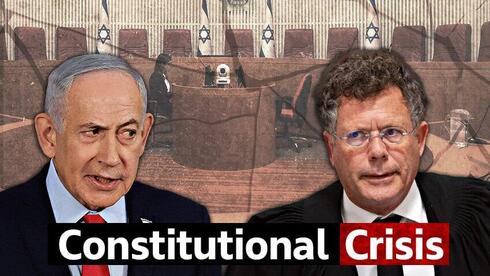
“The only democracy in the Middle-East”
No, no it isn’t. It hasn’t been even a flawed democracy for at least a decade, let alone ever for the people of Palestine.
Its a fascist shithole who’s leadership figured out can stay in power forever if they start a new war.
Yeah, apartheid states aren’t democracies.
By all means, a mischievous terrorist state
I wouldn’t call genocide mischievous. Not be a dick but my grandmother escaped Europe during WW2 and explained some of her trauma. Try to never lessen the atrocities, it makes people think it’s normative
This raises the question: which Middle Eastern country IS the most democratic?
- *whose
- And it’s very much a democracy, why, it’s doing all the things it sees the US do all the fucking time!
A democracy that needs to start a new genocidal war every time the leader is about to face justice for corruption?
A democracy that bars 20% of the population from basic human rights and commits genocide against them?
A democracy that operates the most extensive domestic spying system in the world and uses it to subjugate its people?
A democracy that sponsors one of the most infamous pedophile sex traffickers of all time?
A democracy that mass censors its own media to downplay its crimes and the destruction it gets from Iran?
A democracy that states its an ethnostate that is fulfilling a religious prophecy?
Yeah, that’s not a democracy, that’s a fascist, Zionist state, and you’re an asshole.
An asshole who knows sarcasm though. JFC
I think its apparent you don’t really know jack shit tbth
The United States has only ever been at peace for maybe 15-20 years out of its war mongering 250 years
And also not a democracy
Never was for the majority, no, still isn’t
And it isn’t really much of a democracy, now is it?
Never was
Fascists gonna fash.
The zionists are even traitors to themselves. Why abide by the rules of your supreme court if you shit on all the rules every day?
Because “secretly” they shit on the concept of democracy, laws and courts. They want a military theocracy.
Just like Iran. Just like the US.
without the USA backing bennys illegitmate government, he and his cabinet would be in jail right now.
As an American, this sounds familiar.
Israel doesn’t have a constitution.
It doesn’t have a “document constitution” it has a political constitution that is based upon precedence. That precedence being set by the high court.
So when the High Court decided that self determination in Israel is reserved only for the Jewish population, thereby enshrining the right to settler colonialism and they’ve enshrined apartheid into their Political Constitution.
There are other ways to talk about this. We don’t have to torture these words into pretending to be something they are not.
High court precedents are not the the same thing as a constitution because they are not above all branches of government. They are of one branch.
You’re doing the “torture” here. A constitution is a set of rules or precedents which establish the legal basis for a state. It can be a set of rules in a document like the French constitution, or it can be the sum total of legal precedent and convention like the British constitution. Historically, most constitutions have been the latter.
You’re applying a USA understanding of government to a completely different government structure because you want there to be an actual document called “The Constitution”.
But that’s not the case here. Either way, we can also take your point further, because a “Constitutional Crisis” can also apply to different branches of government getting into institutional conflict with each other. Since, as we know, legalese likes to use Latin etymology.
The word “constitution” comes from Latin “constitutio,” meaning a regulation or order, via Old French “constitucion,” and originally referred to laws or customs established by authority. It entered English in the 14th century with meanings including laws, physical makeup, and the structure of a state.
Either way, it’s still a Constitutional Crisis and very valid terminology to use.
Israel’s founders didn’t sit down one day and come up with a new form of non-constitutional democracy.
They convened an assembly back in 1949 to draft the constitution; and that assembly simply failed to do so. The plan was to establish the Knesset (parliament), and kick the can of writing a constitution to them. The Knesset also never finished the job, instead passing a patchwork set of basic laws. It wasn’t until 1995, that their Supreme Court unilaterally asserted that basic laws formed a quasi constitution (a position that they did not start entertaining until the early 90s).
It is true that Israel is not the only country that has stumbled into this system. However, it is a small club. Within that club, what sets Israel apart is how young it is. This is not merely a historical curiosity yet. The tensions that prevented them from forming a constitution in the first place are still alive and well. And, they do not have the generations of precedent needed to provide the clarity that a real constitution can.
So they’re actually only a little better than a religious theocracy like Iran. Different processes and paths but similar results.
That’s a very layered statement to respond to and depends on personal weighted values that I can’t adequately answer.
Not in the defense of Iran’s theocracy because there’s no defending it and they openly say that they’re a theocracy, but more about perspective:
Israel claims to be secular and equal, yet -
- marriages can only go through religious council (to maintain apartheid and “blood purity” as literally described by their politicians).
- requests to open schools, civil societies, non-profits, etc. by anyone who isn’t Jewish Israeli are rejected (so effectively there’s reliance on Israeli Jewish institutions for many things from jobs to education to civil support)
- if you’re in an Arab neighborhood or town it is heavily under-served and the police purposefully turn a blind eye towards criminal activity (sometimes catch and release when they discover what neighborhoods the criminal is active in)
- religious minorities experience violence and hate (both subtle and obvious) and have little to no recourse for justice.
- their expansionism and colonialism is heavily fueled by religious zealots - so the supposedly secular state is enacting genocide for religious zealots but also claims to be secular.
So it’s hard to determine if it’s a little bit better. Some might argue it’s worse.
Nonetheless, it’s essentially a theocracy. Iran vs Israel is allegorically like Abel and Cain, sharing the same root source but with enough differences to want to kill each other.
I think framing it in religious terms is a bit too dismissive and lacking in depth. It’s the exact framing that Israel has perpetuated on purpose so western audiences could be dismissive or find it too complicated to care about.
For those who tried to read 50 billion likely-AI words before getting to what this is actually about.
The court froze government decisions from March 24 and March 31 that dealt with appointing a new council to the Second Authority. The practical meaning was that the outgoing council would remain in place in its current composition and would not be replaced for now.
In their decision, the justices pointed to what they called a “puzzling proximity in time” between the resignations of several council members, requests by the communications minister and earlier High Court decisions. They also noted that most of the members who resigned from the current council asked to continue serving on the new one.
The court wrote that, on its face, this conduct did not align with council members’ duty of loyalty under the Second Authority Law. It therefore took the unusual step of ruling that the members who resigned would not, at this stage, be counted for purposes of determining the current council’s quorum.
The justices said the decision was necessary under “unique and exceptional circumstances” to prevent what they described as a deliberate attempt to obstruct and paralyze the council’s work during the interim order.
So the court thinks there is corruption due to the resignations, and calls for a hold. The gov says they were following the law so it’s fine.
Human, summarize this AI article for me.
For those who tried to read 50 billion likely-AI words before getting to what this is actually about.
I’m not sure why you would say that.
It’s ~1,500 words, a 5 minute read. The style is like any other news article that isn’t an opinion column, and I don’t see any “LLM speak.”