Ministers voted unanimously not to recognize actions by the Second Authority council restored by the court, including possible approval of Reshet 13’s sale, drawing warnings from legal officials and journalists’ groups
You’re applying a USA understanding of government to a completely different government structure because you want there to be an actual document called “The Constitution”.
But that’s not the case here. Either way, we can also take your point further, because a “Constitutional Crisis” can also apply to different branches of government getting into institutional conflict with each other. Since, as we know, legalese likes to use Latin etymology.
The word “constitution” comes from Latin “constitutio,” meaning a regulation or order, via Old French “constitucion,” and originally referred to laws or customs established by authority. It entered English in the 14th century with meanings including laws, physical makeup, and the structure of a state.
Either way, it’s still a Constitutional Crisis and very valid terminology to use.
You’re doing the “torture” here. A constitution is a set of rules or precedents which establish the legal basis for a state. It can be a set of rules in a document like the French constitution, or it can be the sum total of legal precedent and convention like the British constitution. Historically, most constitutions have been the latter.


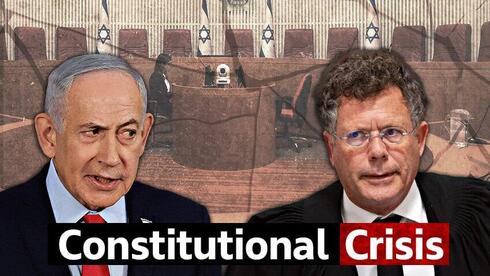
There are other ways to talk about this. We don’t have to torture these words into pretending to be something they are not.
High court precedents are not the the same thing as a constitution because they are not above all branches of government. They are of one branch.
You’re applying a USA understanding of government to a completely different government structure because you want there to be an actual document called “The Constitution”.
But that’s not the case here. Either way, we can also take your point further, because a “Constitutional Crisis” can also apply to different branches of government getting into institutional conflict with each other. Since, as we know, legalese likes to use Latin etymology.
Either way, it’s still a Constitutional Crisis and very valid terminology to use.
You’re doing the “torture” here. A constitution is a set of rules or precedents which establish the legal basis for a state. It can be a set of rules in a document like the French constitution, or it can be the sum total of legal precedent and convention like the British constitution. Historically, most constitutions have been the latter.