The US is going all in on the doomed oil and coal economy, and going to continue to use the pursuit of oil as a cause for war, until its too weak to do so. Meanwhile the PRC and countries allied to it are transitioning to the green energy future: solar, wind, nuclear fission and fusion.
The long-term trend will be that the countries that are able to harness more energy, will outpace those that don’t. So soon it’ll be the US and Europe playing catchup to Asia, Africa, and Latin America.
A casus belli (from Latin casus ‘occasion’ and belli ‘for war’; pl. casus belli) is an act or an event that either provokes or is used to justify a war.
China isn’t exactly transitioning, they added 78GW of new coal power plants last year and are building more this year. They installed massive amounts of solar as well because it’s cheap and they need massive amounts of power.
That’s by percentage, if you look at absolute generation it looks more like this:
Coal is a smaller percentage of the total mix than in 2000 because they basically weren’t using solar or wind at all back then. They are still increasing their consumption of coal in absolute figures by a significant amount.
Solar and Wind started at 0.06% in 2001. That was 0.75TWh. In 2025 they made 21.83% with 2310.4TWh. That’s a lot of electricity and explains why the other generation methods have gone down proportionally. This doesn’t indicate a transition because the total generation has massively risen too. Hydro over the same period grew from 277.43TWh to 1397.06TWh, but by percentage dropped from 18.74% to 13.2% - I don’t think anyone would argue that China is transitioning away from hydro.
For a transition to occur we would need to see a plateau and reduction in coal generation, not a 5x increase.
China is still a developing nation, and its countryside is still being modernised and connected into the wider infrastructure framework of the urban centres. This requires constant expansion of the electricity grid and output. It is not a mature, developed nation with little need to expand energy production like vast chunks of Europe and the US.
The US is going all in on the doomed oil and coal economy
It’s not. The U.S. adds approximately 40 GW of new renewable energy capacity per year, with 27 GW of that in solar and 6 GW in Wind. Over 90% of newly added grid capacity is green, largely thanks to the speed and scale of clean energy expansion relative to alternatives.
Where the US sucks is in retiring older facilities in order to cut emissions over time. We’re just producing an enormous energy glut. The carbon we emit is plateauing, but it’s never going to decline on these terms.
the US has a miniscule amount of green energy, and its not increasing in proportion to fossil fuels
In 2023, petroleum remained the most-consumed fuel in the United States, as it has been for the past 73 years, and renewables exceeded coal for the first time in about 140 years.
…
Electricity generation from zero-carbon sources such as wind and solar has increased rapidly in recent years. In 2022, U.S. energy consumption from renewable sources surpassed that from nuclear for the first time since 1984. U.S. nuclear energy consumption began in the late 1950s and has remained fairly constant since the early 2000s.


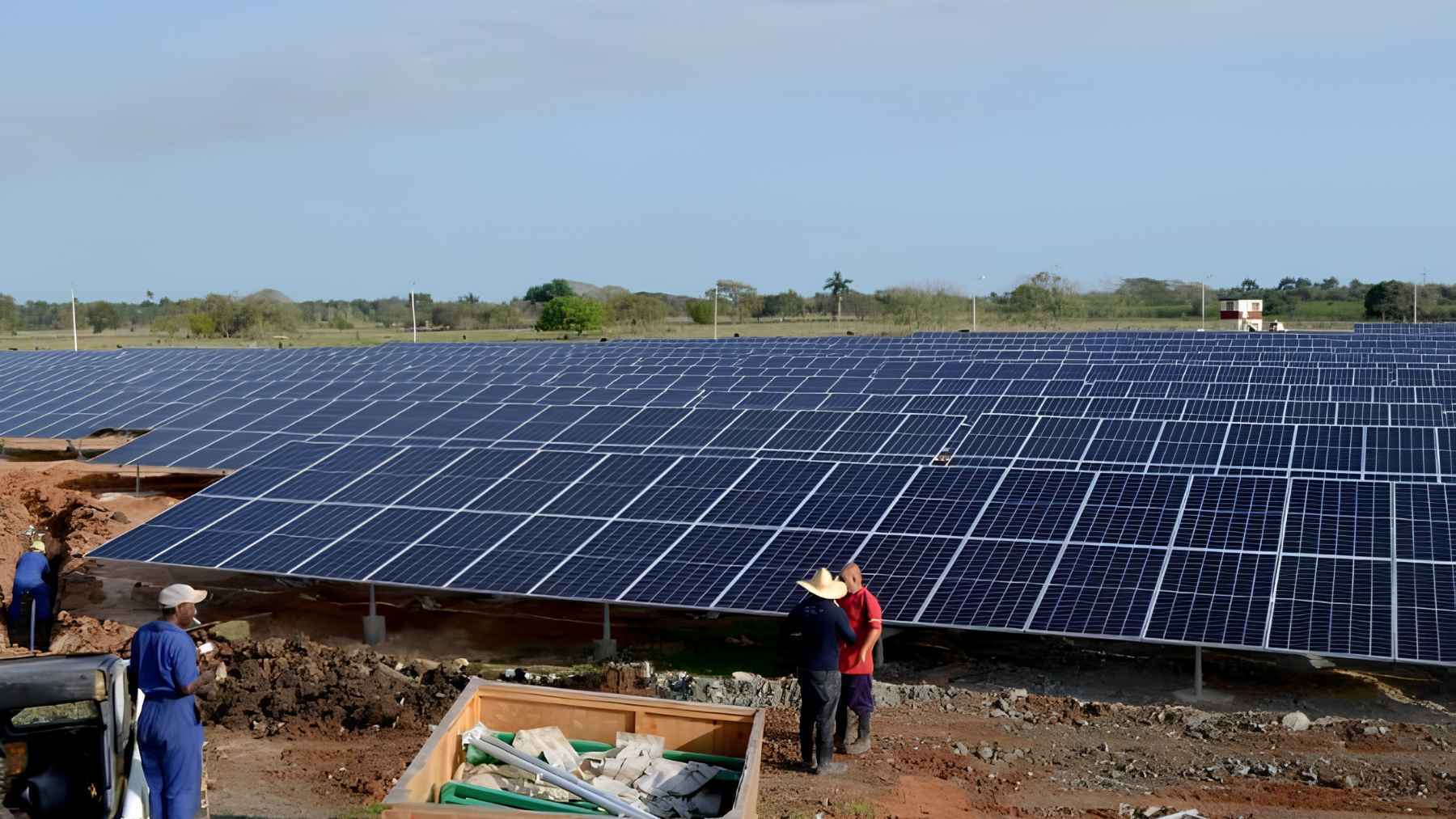
The US is going all in on the doomed oil and coal economy, and going to continue to use the pursuit of oil as a cause for war, until its too weak to do so. Meanwhile the PRC and countries allied to it are transitioning to the green energy future: solar, wind, nuclear fission and fusion.
The long-term trend will be that the countries that are able to harness more energy, will outpace those that don’t. So soon it’ll be the US and Europe playing catchup to Asia, Africa, and Latin America.
while the correction is a fine one, comrade Dessalines is a communist, they are not downplaying the evils of the US empire
it’s not a correction
https://en.wikipedia.org/wiki/Casus_belli
Wasn’t meant like that, but thanks.
Don’t lump Europe together with the US. We are open to renewables and continuously expand them. Which does not apply to the US.
China isn’t exactly transitioning, they added 78GW of new coal power plants last year and are building more this year. They installed massive amounts of solar as well because it’s cheap and they need massive amounts of power.
Yes they are. The proportion of clean to unclean energy is vastly increasing : https://ember-energy.org/countries-and-regions/china/ . There is a green energy revolution for the past few decades.
Also compared to the world average, the PRC is at 42% clean to the world average of 43%, while the US is at 9%. See the article I posted below.
2001 - 2025:
That’s by percentage, if you look at absolute generation it looks more like this:

Coal is a smaller percentage of the total mix than in 2000 because they basically weren’t using solar or wind at all back then. They are still increasing their consumption of coal in absolute figures by a significant amount.
Percentage / proportion over time is more pertinent for the term “transitioning” than absolute levels.
Solar and Wind started at 0.06% in 2001. That was 0.75TWh. In 2025 they made 21.83% with 2310.4TWh. That’s a lot of electricity and explains why the other generation methods have gone down proportionally. This doesn’t indicate a transition because the total generation has massively risen too. Hydro over the same period grew from 277.43TWh to 1397.06TWh, but by percentage dropped from 18.74% to 13.2% - I don’t think anyone would argue that China is transitioning away from hydro.
For a transition to occur we would need to see a plateau and reduction in coal generation, not a 5x increase.
China is still a developing nation, and its countryside is still being modernised and connected into the wider infrastructure framework of the urban centres. This requires constant expansion of the electricity grid and output. It is not a mature, developed nation with little need to expand energy production like vast chunks of Europe and the US.
It’s not. The U.S. adds approximately 40 GW of new renewable energy capacity per year, with 27 GW of that in solar and 6 GW in Wind. Over 90% of newly added grid capacity is green, largely thanks to the speed and scale of clean energy expansion relative to alternatives.
Where the US sucks is in retiring older facilities in order to cut emissions over time. We’re just producing an enormous energy glut. The carbon we emit is plateauing, but it’s never going to decline on these terms.
From what I could find, the US has a miniscule amount of green energy, and its not increasing in proportion to fossil fuels like natural gas: https://www.eia.gov/todayinenergy/detail.php?id=62444
According to EIA data, the US is currently only ~9% clean energy sources, and 91% fossil fuels.
This is way behind the world average for clean energy, which is 43%, and the PRC’s which is 42% despite producing most of the consumer goods for the whole world.
…
:-/
Don’t put Europe in the same sentence as trumpistan please. Wildy incorrect