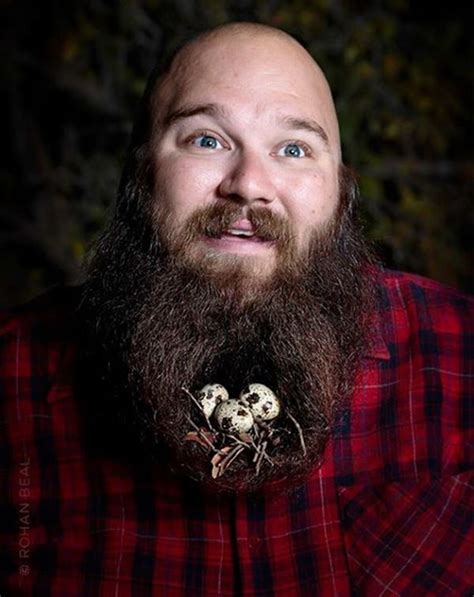

I don’t mean like as an individual I’ve got a certain je ne sais ‘justfuckmyshitup’.
I mean when did “does my hair look good ?” become a thing to worry about for worry ? Do you think birds worry about their hair ? Or horses ? Or amoebas ?
Chimps have been observed using bits of straw as jewelry, so I imagine at least our last common ancestor.
Some birds decorate themselves. My mother had a cockatiel that would perforate colorful paper into strips with her beak and pluck them off to place in her tail.
I don’t know, something related to using mirrors if I had to guess,
Edit: Giving it a bit more thought many animals still care about their plumage etc without anything like that involved…
Do birds worry about their hair? Well… They dont have hair, so probably not.
But do birds worry about their plumage?
Yeah, probably they do.
Because there are many examples of birds using their plumage to attract mates, best known is probably the peacock.In short, my thinking is that you need sexual procreation and a certain minimum intelligence to care for their outward appearance (e.g. I don’t think ants care for outward looks). So probably all mammals and a lot of birds definitely do care “about their hair”. But insects and fish do not.
If cats didn’t worry about their hair then why are they always licking it?
The question in the title is essentially unanswerable. It’s not even possible to point to where an awareness of attraction as opposed to just existing started, or if there even was a starting point.
That being said, chances are that it began at the same point as humans became self aware. Most mammals and plenty of other critters put some degree or another of energy into maximizing their presentation, even if only during mating season.
At some point, any creature that becomes self aware is also going to start seeing the benefits of caring about that.
I suspect you’d be looking at somewhere before homo sapiens, but after whatever “missing link”. Not that I’m confident in the whole idea of a missing link, but that’s tangential. What isn’t tangential is that a lot of the early human-ish critters exhibited signs of self awareness to some degree, so I can’t imagine that sapiens were the first to have it. I seem to recall there being primitive equivalents to combs and such as far back as like ,habilis? Don’t bet money on my memory though
I would imagine that, after multicellular life capable of sexual reproduction developed, there was an incentive for creatures of all kinds to develop techniques to attract mates. And before eyes became a thing, I would imagine that things like scents were (and still are for many species!) important for attracting mates. It definitely goes far beyond mammals, the development of visual, olfactory, and other sensual features for attracting mates is important for all kinds of species that sexually reproduce.
But looks aren’t just for showing off to mates. They might also serve other purposes, like warding off predators or protecting itself from the environment. For instance, our eyelashes were developed to protect our delicate eyes from sand, dust, and other small particles, and the colourful appearance of some frogs indicate that they are poisonous.
Our looks are also how we identify others. For social creatures like us humans, prominent features like our eyes, hair, and ears are used to figure out who you are interacting with. This isn’t unique to humans and isn’t exclusive of visual features either. Dogs can distinguish between trusted individuals and strangers using a combination of sight and scent. Whales have strong sense of family and can identify others through, among other ways, their calls. Dolphins are similar with a pattern of chirps to identify their friends and family.
But if you really want to be pedantic, you could argue that the “look” can be defined as the physical (outer) shape of an organism, in which case the shapes of the receptors, cell membrane, etc. of unicellular microorganisms can be the different “looks” that have developed for different purposes. This would include viruses too, which are only partly alive, which might mean that this idea of “developing looks” could extend before life itself existed!
I didn’t do Biology in school so don’t quote me on any of this!
Even amoebas have 1 hair
deleted by creator
deleted by creator