

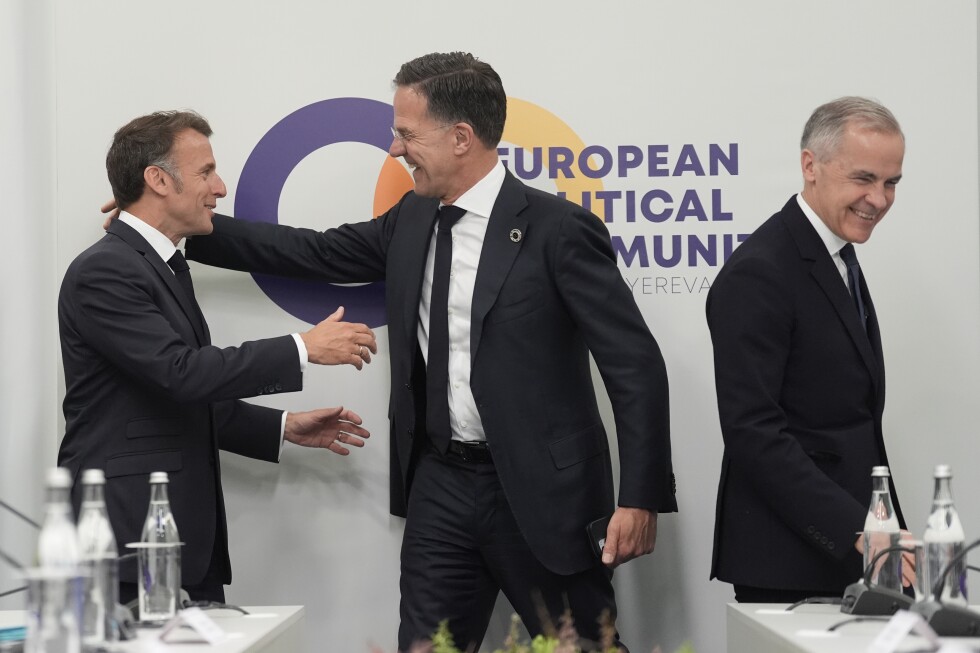
European leaders say President Donald Trump’s decision to pull thousands of U.S. troops out of Germany came as a surprise but is further proof that they must take care of their own security.
European leaders say President Donald Trump’s decision to pull thousands of U.S. troops out of Germany came as a surprise but is further proof that they must take care of their own security.
Dude do you seriously think people in power would solve this like mature adults? Representative democracy encourages maintaining the status quo since that’s better for votes than the risk of changing it. Dictatorship on the other hand encourages slow drainage and exploitation of resources and displays of power that’s how you prevent coups and foreign interference and keep your position.
In both cases it’s not the in the interest of governments to find the best solution that would benefit all parties.
Incorrect. A representative democracy must be in touch with what people want rather than keeping the status quo. The increasing popularity of far-right parties in Europe is causing centrist parties to adopt some of their policies.
Reality is much more nuanced but on average for representative democracy keeping the status quo is the safest policy. That’s why change is painstakingly slow in any direction. This is usually because the masses are either too polarised and/or fragmented that any change would cause too much heat. And/or people generally do be afraid of change and what the future holds. It’s simple human nature, that’s why we like to hold onto old items and why we enjoy nostalgia.
That’s an ideal scenario but personally I believe the modern systems of democracy in western societies are objectively too flawed for this scenario to occur and even when it does I don’t believe it’s sustainable. That’s why I think direct democracy and direct participation should be more ingrained in the culture.
What you say is idealistic and I do agree that it’s a good idea but reality is not a simulation and it’s definitely far from ideal. Politicians will always choose what’s best for them not for the people, sometimes that may align but it’s not a rule.
Putin won’t submit to Europe’s threat of war because he knows they’re bluffing and it’s true. European leaders have no real intentions of going directly into war. War is a too much of a big risk for European governments. If you don’t get every citizen in your country on board with war then you risk discontent which is not good in a representative democracy. You also risk tanking the economy and with the current global situation in the last decade I don’t think there’s anyone left who is willing to or even can absorb the shockwaves of a such major event.
This does prove my point. The far-right feeds on fear and what’s more scary than change. Be it economical change, demographic, cultural, religious, political, or even aesthetic change. They all share the same populist line “everything right now is evil and we need to do things the old way”. That’s how they recruit members. And usually people go with it until it’s too late.
P.S. I apologise if my writing is a mess it’s too late rn and English isn’t my first language.