

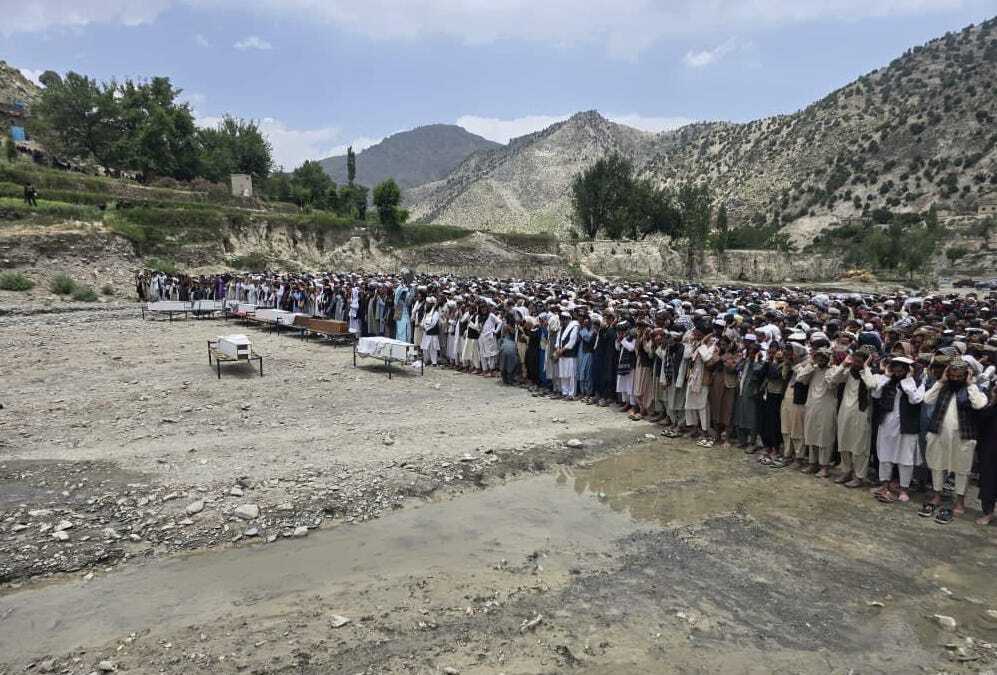
In the village of Mana, located in Afghanistan’s Khost province, close to the Pakistani border, men who normally pass their days farming instead spent the morning of June 10 digging fresh graves for their murdered relatives and neighbors.
The night before, shortly after midnight, Pakistani drones and fighter jets flattened the neighboring homes of two brothers, Siraj and Babri. Nine members of a single family were killed, most of them women and children.
These are not isolated tragedies—they are the latest episodes in a campaign that Drop Site has been documenting along the border since the winter, one in which Pakistan, while presenting itself to Washington and Tehran as an indispensable peacemaker, has bombed Afghan villages, hospitals, schools and markets, emptied entire districts along the border, and blockaded roads until clinics ran out of medicine.
By the United Nations’ own conservative count, Pakistani operations had already killed hundreds of Afghan civilians this year before the June 10 strikes. What plays in Islamabad’s conference halls as “counterterrorism operations,” appears, from Khost and Paktika, like indiscriminate punishment of Afghans living along the border demarcation line.