

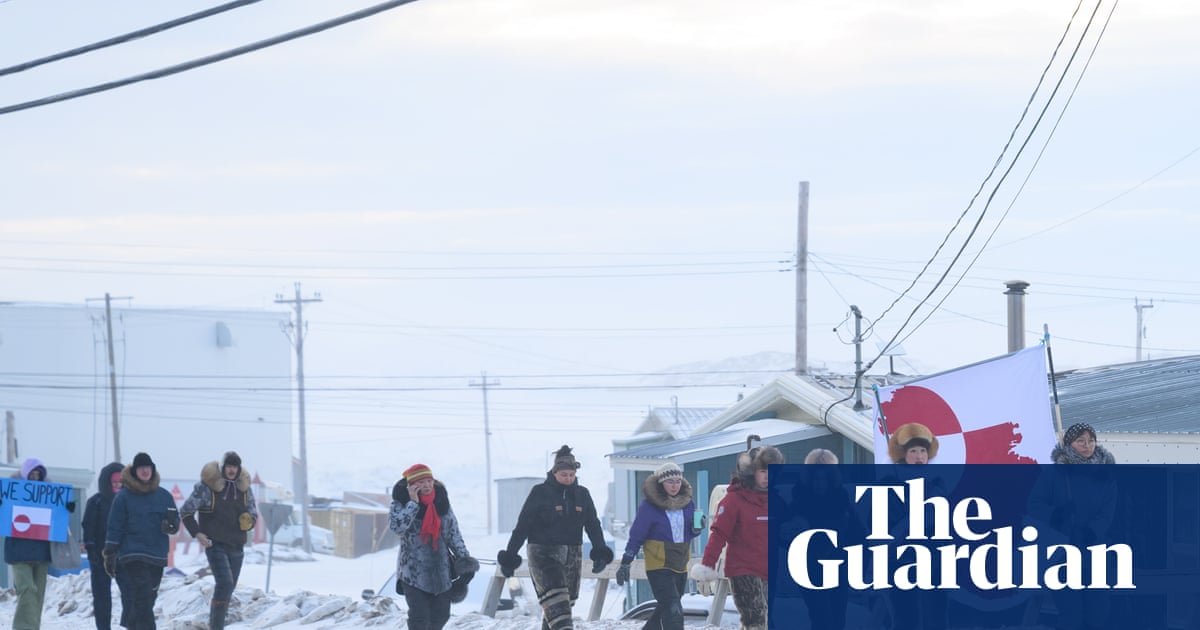
On a bitterly cold recent morning in the Canadian Arctic, about 70 people took to the streets. Braving the bone-chilling winds, they marched through the Inuit-governed territory of Nunavut, waving signs that read: “We stand with Greenland” and “Greenland is a partner, not a purchase.”
It was a glimpse of how, for Indigenous peoples across the Arctic, the battle over Greenland has become a wider reckoning, seemingly pitting the long-fought battle to assert their rights against a global push for power.
Donald Trump’s tug-of-war over Greenland recalled “centuries of imperialism by different nation states but also colonisation by different actors”, said Natan Obed, the president of Canada’s national Inuit organisation, Inuit Tapiriit Kanatami.
Particularly concerning was the focus on Greenland’s efforts to extract mineral wealth or create defence positions, said Obed. “That’s the scariest part of the rhetoric that has been circulating,” he said. “I did believe we were beyond this central premise that if Indigenous peoples do not improve our land based on the criteria of imperialist actors, that somehow we do not have self-determination. The decisions that are made about our land and what we want for it are ours alone.”
why are we talking about this when the orange jackass finally shut the fuck up about it?