

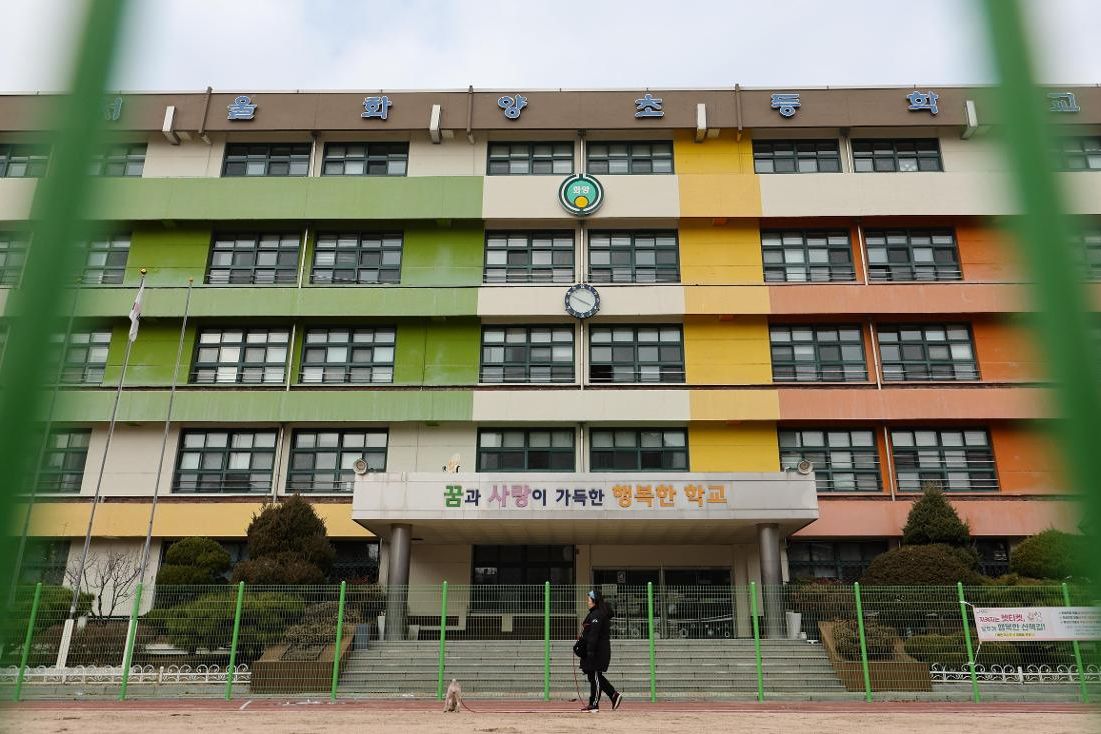
More than 4,000 elementary, middle and high schools across Korea have shut their doors as the country’s student population shrinks, new data shows.
According to the Ministry of Education’s latest figures, revealed on Sunday by Rep. Jin Sun-mee of the ruling Democratic Party of Korea, since 1980, 4,008 schools under 17 regional education offices nationwide have closed as of March this year. During the period, the number of enrolled students decreased from 9.9 million to 5.07 million.
With countries as homogenous as Japan and South Korea, I don’t see racism having a statistically significant effect
Sexism is an issue in both cultures, but if that is a major factor why is Japan’s fertility rate right between Spain and Finland?
Work culture in South Korea is certainly problematic, although I would again bring up Spain and Finland. I would also note Japan’s work culture has had a massive shift over the past couple decades. The average Japanese worker works far fewer hours than the average American worker, and fewer than the OECD average. The '90s stereotypes about Japanese work culture are no longer true
Here’s a better question: Why would you want to have kids in North Korea?
The fertility rate in the north is more than double the South, but here’s a more interesting fact: The birthrate in the North has been steadily declining for decades in almost lockstep with the South (note: there is a bit of wonkiness with a couple years in both data sources. Ignore the outliers), just at a slightly slower pace
I used this site to compare country pairs. With the Koreas you can see shared inflection points, such as in 1981, and a general trend line that looks the same
Then compare Russia and Ukraine. A much more volatile fertility rate. In 1986/1987, both countries share a local maximum, followed by a very sharp decline that continues until a local minimum right around 2000. We don’t see this pattern with the others (although they all seem to follow the same trend)
Finally you have the US and Canada. Shared local maximum in 1990/1991, and again in 2008. Both closely follow each other in terms of fertility rate inflection points, but not at the some times as other pairs
Also of note: All the lowest fertility rate countries (South Korea, Taiwan, and China) are geographically near each other, with very similar primary industries - high-tech manufacturing
My hypothesis: The most important factor is environmental. Likely an air pollutant of some kind (maybe several kinds)
I don’t have much evidence for this other than correlated fertility rates, but it’s the only thing I can think of that fits the data
Pollution would make sense if people were trying to have kids but couldn’t. But they’re not trying to have kids at all!
The more likely explanation—related to tech—is that we don’t need kids anymore. For 99% of human history, children were necessary and not having kids was basically impossible (horny kids and no birth control). Kids were how humans kept alive/stable as well as expanded their power and influence! It’s also how they got cared for in old age (though that’s a much lesser concern because I seriously doubt humans of the past thought that hard about such things when living to 40 was considered amazing).
Now we have birrh control and—in Western societies—stability/safety is much more likely if you don’t have kids. We’ve basically flipped the script on our evolution.
You want people to have kids? Flip the script back! Make anyone under 30 without kids pay a massive tax that pays for the kids of people who have them! Basically, make everyone who didn’t have kids pay child support.
Make having kids the best damned economic decision anyone can make with diminishing returns after two (kids).
Consider that there might not be a single unifying explaination and instead a number of compounding factors.