
The unthinkable has happened. The US is Europe’s adversary. The stark, profound betrayal contained in the Trump administration’s national security strategy should stop any further denial and dithering in Europe’s capitals. Cultivating “resistance Europe’s current trajectory in European nations” is now Washington’s stated policy.

But contained within this calamity is the gift of clarity. Europe will fight or it will perish. The good news is that Europe holds strong cards.

The US’s bet on AI is now so gigantic that every Maga voter’s pension is bound to the bubble’s precarious survival. AI investment now rivals consumer spending as the primary creator of American economic growth. It accounted for virtually all (92%) GDP growth in the first half of this year. Without it, US GDP grew only 0.1%. Despite Donald Trump’s posturing, he is on shaky economic ground.

Trump’s political coalition is shaky, too. In July and again this month, he has been unable to force Senate Republicans to pass his AI moratorium bill, which would have prevented states from drafting their own AI laws. The Steve Bannon wing of Maga fears that AI will displace workers en masse, and is appalled by what children are exposed to on digital platforms. Maga voters particularly mistrust big tech’s political power. Tech is a dangerous topic for Trump.

  • Grimy@lemmy.world
    link
    fedilink
    English
    arrow-up
    14
    ·
    4 days ago

    Ursula von der Leyen, the president of the European Commission, has two cards to play that might pop the AI bubble. If she does so, Trump’s presidency will be thrown into crisis.

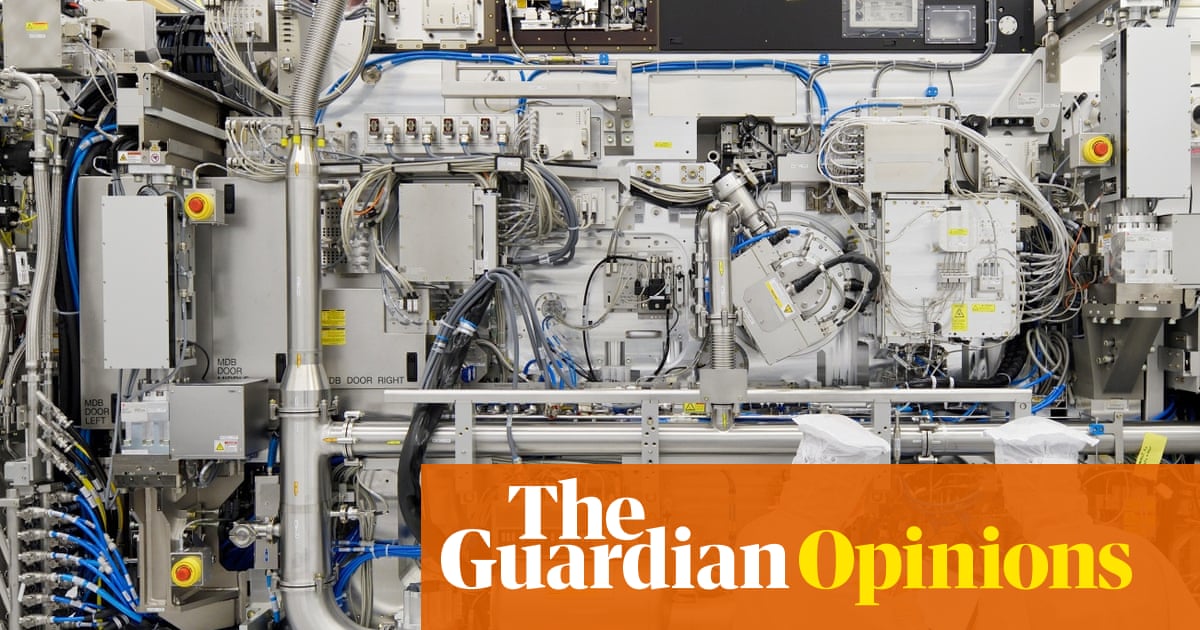
    First, Dutch company ASML commands a global monopoly on the microchip-etching machines that use light to carve patterns on silicon. These machines are essential for Nvidia, the AI microchip giant that is now the world’s most valuable company. ASML is one of Europe’s most valuable companies, and European banks and private equity are also invested in AI. Withholding these silicon-etching machines would be difficult for Europe, and extremely painful for the Dutch economy. But it would be far more painful for Trump.

    The US’s feverish investment in AI and the datacentres it relies on will hit a wall if European export controls slow or stop exports to the US – and to Taiwan, where Nvidia produces its most advanced chips. Via this lever, Europe has the means to decide whether and by how much the US economy expands or contracts.

    Second, and much easier for Europe, is the enforcement of the EU’s long-neglected data rules against big US tech companies. Confidential corporate documents made public in US litigation show how vulnerable companies such as Google can be to the enforcement of basic data rules. Meanwhile, Meta has been unable to tell a US court what its internal systems do with your data, or who can access it, or for what purpose.

    This data free-for-all lets big tech companies train their AI models on masses of everyone’s data, but it is illegal in Europe, where companies are required to carefully control and account for how they use personal data. All Brussels has to do is crack down on Ireland, which for years has been a wild west of lax data enforcement, and the repercussions will be felt far beyond.