I need to address the condescension in your response. I didn’t approach this with an agenda to disprove you. I shared what I understood and acknowledged uncertainty where it existed. That’s how honest discussions work. Your assumption that this is my “very first time looking into it” and that I need to “allow my position to evolve” is patronizing and unwarranted.
On the substance:
Invasive classification: The fact that ecologists are divided on this is exactly my point about nuance. You cannot simply declare something settled because “a large number of sources” say so when the scientific community itself is debating it. The article I cited explicitly states experts disagree.
Buzz pollination: You moved the goalposts. Your original claim was that honey bees “cannot effectively pollinate native plants” full stop. Now you’re talking about buzz pollination specifically. Yes, honey bees cannot buzz pollinate. But many native North American plants do not require buzz pollination and are effectively pollinated by honey bees. Tomatoes, blueberries, and cranberries need buzz pollination. Sunflowers, asters, goldenrod, and countless other natives do not. Your broad claim was incorrect.
Disease transmission: You completely missed my point. If the problem is industrial beekeeping practices creating disease reservoirs, then those practices are the problem. Colony collapse does not discriminate between well-managed hives and factory farm operations. It kills bees indiscriminately. Celebrating it as a solution is like celebrating a disease outbreak in factory farms instead of advocating for better practices.
Colony collapse as good: This is where your argument fully breaks down. Colony collapse disorder causes immense suffering to the bees themselves. If your concern is ecological harm, then advocate for reduced hive density, better management, or restrictions on commercial beekeeping in sensitive areas (which already exist in many places, as you noted with the USDA guidance). Celebrating the mass death of millions of bees as “a good thing” because it might inconvenience their owners is callous and doesn’t actually address the ecological concerns you claim to care about. Beekeepers respond to colony collapse by importing more bees and intensifying their practices, not by scaling back operations.
Your comparison to dairy farms going out of business is false equivalence. A business closing is a policy outcome. Colony collapse is an ecological disaster that happens TO the bees, causes them suffering, and does not reduce the overall population of managed hives because beekeepers simply replace losses.
I am genuinely interested in native pollinator conservation. But your position requires celebrating bee suffering as ecologically beneficial when the evidence does not support that conclusion, and better solutions exist.


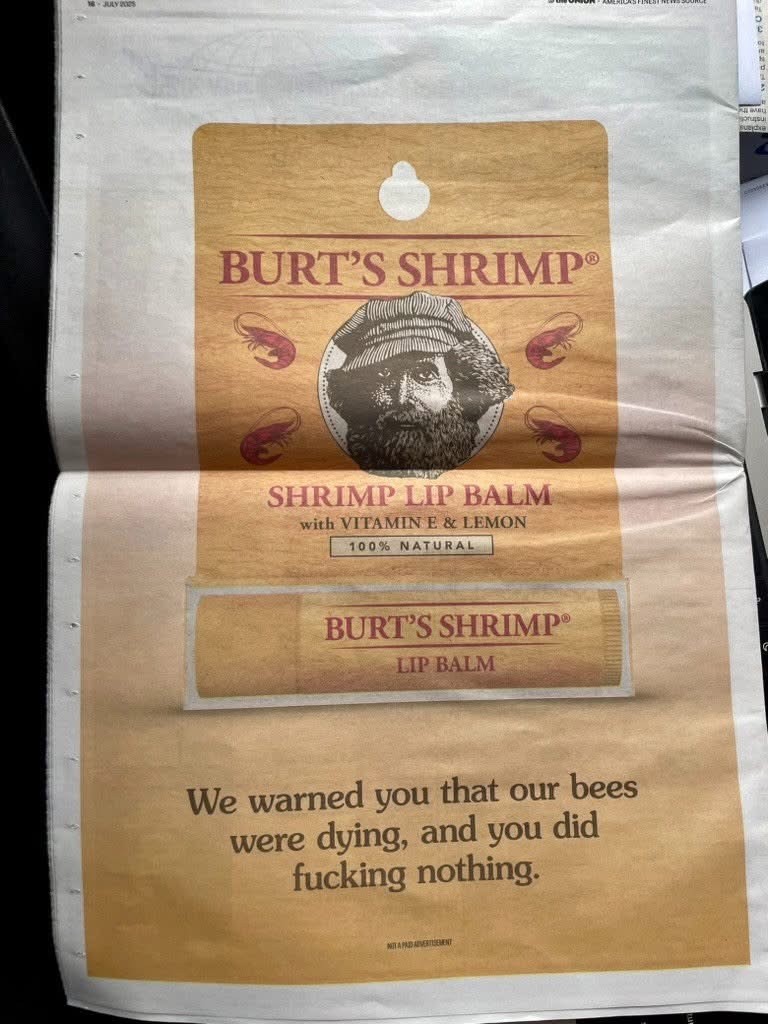
Removed by mod
I need to address the condescension in your response. I didn’t approach this with an agenda to disprove you. I shared what I understood and acknowledged uncertainty where it existed. That’s how honest discussions work. Your assumption that this is my “very first time looking into it” and that I need to “allow my position to evolve” is patronizing and unwarranted.
On the substance: Invasive classification: The fact that ecologists are divided on this is exactly my point about nuance. You cannot simply declare something settled because “a large number of sources” say so when the scientific community itself is debating it. The article I cited explicitly states experts disagree.
Buzz pollination: You moved the goalposts. Your original claim was that honey bees “cannot effectively pollinate native plants” full stop. Now you’re talking about buzz pollination specifically. Yes, honey bees cannot buzz pollinate. But many native North American plants do not require buzz pollination and are effectively pollinated by honey bees. Tomatoes, blueberries, and cranberries need buzz pollination. Sunflowers, asters, goldenrod, and countless other natives do not. Your broad claim was incorrect.
Disease transmission: You completely missed my point. If the problem is industrial beekeeping practices creating disease reservoirs, then those practices are the problem. Colony collapse does not discriminate between well-managed hives and factory farm operations. It kills bees indiscriminately. Celebrating it as a solution is like celebrating a disease outbreak in factory farms instead of advocating for better practices.
Colony collapse as good: This is where your argument fully breaks down. Colony collapse disorder causes immense suffering to the bees themselves. If your concern is ecological harm, then advocate for reduced hive density, better management, or restrictions on commercial beekeeping in sensitive areas (which already exist in many places, as you noted with the USDA guidance). Celebrating the mass death of millions of bees as “a good thing” because it might inconvenience their owners is callous and doesn’t actually address the ecological concerns you claim to care about. Beekeepers respond to colony collapse by importing more bees and intensifying their practices, not by scaling back operations. Your comparison to dairy farms going out of business is false equivalence. A business closing is a policy outcome. Colony collapse is an ecological disaster that happens TO the bees, causes them suffering, and does not reduce the overall population of managed hives because beekeepers simply replace losses.
I am genuinely interested in native pollinator conservation. But your position requires celebrating bee suffering as ecologically beneficial when the evidence does not support that conclusion, and better solutions exist.